How Much House Can I Actually Afford in Monterey Park?
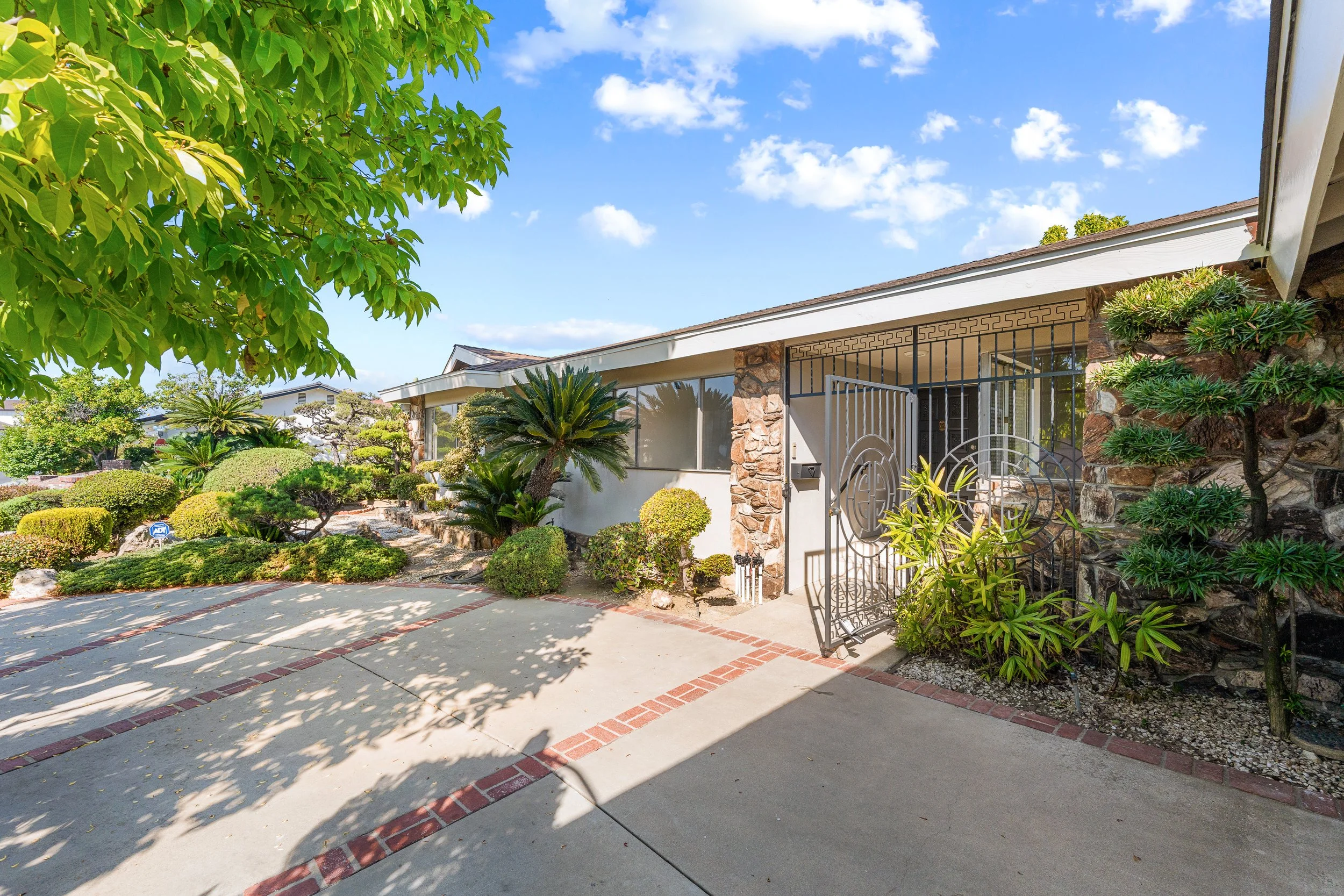
Listed by May Kunka of Compass in Monterey Park
How much house you can afford in Monterey Park depends on more than the maximum mortgage amount a lender will approve. Your actual monthly cost can include your mortgage payment, property taxes, homeowners insurance, HOA dues, utilities, maintenance, and potentially mortgage insurance. Before deciding on a price range, I recommend calculating the total monthly payment and making sure you'll still have comfortable savings after your down payment and closing costs.
You've talked with a lender.
Great news!
You're approved for $1 million.
So now we start looking at $1 million homes, right?
Maybe.
But first I want to ask you a different question:
Do you actually want the monthly payment that comes with a $1 million home?
Those are two very different things.
One of the most important conversations I have with buyers, especially first-time buyers, is the difference between:
"How much can I qualify for?"
and
"How much am I comfortable spending?"
Your lender helps us answer the first question.
We need to answer the second one together.
Start With the Monthly Payment, Not the Purchase Price
Buyers naturally search by price.
$800,000.
$900,000.
$1 million.
But the number that will affect your everyday life after closing isn't the purchase price.
It's your monthly housing expense.
That can include:
Principal and interest
Property taxes
Homeowners insurance
HOA dues
Mortgage insurance, if applicable
Other property-specific expenses
And then there are expenses that aren't necessarily included in the mortgage payment at all:
Utilities
Repairs
Landscaping
Maintenance
Future improvements
That's why two Monterey Park homes with exactly the same purchase price can have noticeably different ownership costs.
Your Pre-Approval Is a Ceiling, Not a Spending Goal
This is something I wish more buyers understood.
If a lender approves you for $1 million, that doesn't mean you need to spend $1 million.
It means that based on the information reviewed by the lender and its underwriting requirements, you may qualify for financing at that level.
Your lender doesn't decide how much money you want left every month for:
Travel.
Restaurants.
Your car.
Retirement.
Savings.
Kids.
Hobbies.
Emergencies.
Life.
You do.
I don't want you buying a beautiful house and then feeling stressed every time you go to dinner.
Don't Forget About Property Taxes
Property taxes need to be part of our affordability calculation from the beginning.
This is particularly important for buyers who have been looking at online mortgage calculators.
A calculator might show you principal and interest based on the purchase price, down payment, and mortgage rate.
That doesn't necessarily mean you're looking at your complete monthly housing cost.
Your lender can estimate property taxes for the specific property so we can incorporate them into your payment.
I also want buyers to understand that the seller's current property tax bill isn't necessarily what you will pay after purchasing the property.
California's property tax system means a change in ownership generally results in reassessment, subject to applicable exclusions.
So don't look at a seller's old tax bill and assume that's going to be yours.
Homeowners Insurance Is Now Part of the House-Hunting Conversation
This has become increasingly important in California.
I don't want buyers treating homeowners insurance as something they figure out two days before closing.
The California Department of Insurance recommends shopping and comparing residential insurance because premiums and availability can vary by insurer and property. It also provides comparison tools and resources for consumers having difficulty finding coverage.
The department's 2026 comparison tool also notes that wildfire-related surcharges can vary significantly based on a home's vulnerability, which means an online statewide insurance estimate may not accurately reflect the property you're considering.
That's why I increasingly want buyers to investigate insurance early in the transaction.
Before you become completely committed to the house, let's understand whether it can be insured and approximately what that insurance will cost.
What About HOA Dues?
If you're buying a Monterey Park condo or townhome, we also need to add HOA dues.
Suppose you're comparing:
Property A: $750,000 with a $550 monthly HOA
Property B: $775,000 with a $250 monthly HOA
Property A has the lower purchase price.
But does it have the lower monthly cost?
Not necessarily.
Then we need to go one step further.
What do those HOA dues include?
Water?
Trash?
Insurance on certain common areas?
Amenities?
Exterior maintenance?
The fee itself doesn't tell us whether the association is a good value.
But it absolutely belongs in your affordability calculation.
Don't Spend Every Dollar You Have on the Down Payment
This is another mistake I want buyers to avoid.
You've saved $200,000.
Fantastic.
That doesn't automatically mean I want you putting the entire $200,000 into the down payment.
You may also need money for:
Closing costs
Inspections
Moving
Immediate repairs
Furniture
Appliances
Emergency savings
Homes have an amazing ability to need something shortly after you purchase them.
Maybe the water heater stops working.
Maybe you discover you desperately need window coverings.
Maybe the refrigerator doesn't fit your needs.
Maybe you decide one room needs paint immediately.
I want you to receive the keys with money still in the bank.
This Is Why 20% Down Isn't Always the Answer
Buyers sometimes believe they shouldn't purchase until they have a 20% down payment.
But that's not a universal rule.
Depending on the loan program and your qualifications, you may be able to purchase with less.
That could mean mortgage insurance or a different monthly payment, so we need your lender to run the numbers.
But consider this:
Would you rather put 20% down and have almost nothing left in savings?
Or put slightly less down, accept a somewhat higher monthly payment, and maintain a healthy financial cushion?
There's no single correct answer.
That's why I want us comparing scenarios instead of automatically chasing a particular down-payment percentage.
Ask Your Lender to Run Multiple Purchase Prices
This is one of the most useful things you can do.
Instead of asking:
"What's the maximum I qualify for?"
ask your lender to show you something like:
$800,000 purchase
$850,000 purchase
$900,000 purchase
$950,000 purchase
For each scenario, ask for an estimated:
Down payment
Principal and interest
Property taxes
Homeowners insurance
Mortgage insurance, if applicable
Estimated total monthly payment
Estimated cash needed to close
Now we're making a decision with real numbers.
You may discover you're perfectly comfortable at $900,000.
Or you might look at the payment and say:
"Absolutely not. Let's stay under $825,000."
Great.
That's valuable information.
Mortgage Rates Can Change Your Buying Power
This is another reason I don't like establishing a price range once and forgetting about it.
Mortgage rates affect your monthly payment and therefore your buying power.
Current September 2026 buyer guidance continues to identify affordability as the biggest challenge facing buyers, with mortgage rates remaining in the mid to upper 6% range nationally.
If rates move meaningfully while you're searching, I want your lender updating the numbers.
A price range that felt comfortable three months ago may not feel the same today.
The opposite can also be true.
If rates improve, your options may expand.
Consider the Condition of the Home
Let's say you can comfortably purchase at $950,000.
Does that mean every $950,000 Monterey Park home fits your budget?
No.
Imagine one is beautifully maintained.
The other needs:
A roof.
HVAC.
New flooring.
Electrical work.
Kitchen appliances.
Landscaping.
Those homes don't have the same financial impact even though the purchase prices are identical.
When we're looking at a home that needs work, I want you thinking beyond:
"Can I afford to buy it?"
We also need to ask:
"Can I afford to own it and make the improvements it needs?"
Leave Room for Maintenance
This is one of the least exciting parts of homeownership.
Things break.
That's true whether you buy a brand-new home or a 70-year-old house.
But Monterey Park has plenty of older housing stock, so understanding the condition of the home's major systems is particularly important.
During inspections, I don't just want to identify problems we're going to negotiate with the seller.
I also want you learning:
What might need replacement in five years?
What's nearing the end of its expected life?
What should we budget for after closing?
Your inspection report can become part of your future maintenance plan.
Don't Forget About Your Life After Closing
This is probably the most important section of this entire article.
I don't want your house to own you.
If purchasing at your maximum approval means:
You stop contributing to retirement.
You can't rebuild your emergency savings.
You can't travel.
Every repair goes on a credit card.
You're stressed every month.
Then I don't care that the lender technically approved the loan.
We should look at a lower price range.
Buying a home should fit into your financial life.
Your entire financial life shouldn't have to bend around the house.
Monterey Park Prices Vary More Than the Headline Number Suggests
This is another reason citywide "average home price" articles aren't particularly helpful when determining what you can afford.
One August 2026 analysis of 246 Monterey Park closings over the previous six months found a median sale price of approximately $880,000, but the middle half of those transactions ranged from about $700,000 to $1.08 million.
That's a huge range.
And that's actually useful.
It means the question isn't:
"Can I afford the average Monterey Park home?"
It's:
"What type of Monterey Park home fits my budget?"
Maybe that's a condo.
Maybe it's a townhome.
Maybe it's a smaller single-family home.
Maybe we adjust location, condition, square footage, or lot size.
Once I understand the payment you're comfortable with, I can help you figure out where the best opportunities are within that budget.
Frequently Asked Questions
How much income do I need to buy a home in Monterey Park?
There's no single income requirement because affordability depends on the purchase price, down payment, mortgage rate, debts, credit profile, taxes, insurance, HOA dues, and loan program.
A lender can evaluate your complete financial picture and determine what you qualify for.
How much money should I save before buying a house?
You should consider more than your down payment.
Your savings plan may also need to account for closing costs, inspections, moving expenses, immediate repairs, and an emergency reserve.
The amount that's appropriate depends on your particular purchase and financial situation.
Do I need 20% down to buy a home in Monterey Park?
Not necessarily.
Loan programs may allow qualified buyers to purchase with less than 20% down. The tradeoff can include mortgage insurance, different rates, or other financing considerations.
Ask your lender to compare multiple down-payment scenarios rather than assuming 20% is your only option.
Should I buy the maximum amount I'm pre-approved for?
Not automatically.
Your pre-approval helps establish how much financing you may qualify for. Your personal budget determines how much you're comfortable spending.
Those numbers do not have to be the same.
How much should I budget for homeowners insurance?
The cost depends on the specific property, coverage, insurer, deductible, construction characteristics, risk factors, and other variables.
The California Department of Insurance recommends comparing insurers and provides tools to help consumers shop for residential coverage.
Rather than relying solely on a generic estimate, obtain quotes for the property you're considering.
Should I get an insurance quote before making an offer?
You may not always have enough time to obtain a complete quote before submitting an offer, particularly on a competitive property.
But I recommend investigating insurance as early as practical and not waiting until the end of escrow.
If insurance availability or cost could materially affect whether you can afford the home, we want to know that as soon as possible.
What monthly payment should I be comfortable with?
That's personal.
Your lender can tell you what payment you may qualify for, but only you know how much you want available each month for savings, retirement, travel, family expenses, and everything else in your life.
I encourage buyers to choose a payment that leaves some breathing room rather than automatically purchasing at their maximum qualification.
So What's the Next Step?
If you're thinking about buying a home in Monterey Park, don't start by asking me:
"What can I get for $1 million?"
First, let's figure out what you actually want to spend.
We'll get your lender involved.
We'll look at several purchase-price scenarios.
We'll estimate the total monthly payment.
We'll discuss your down payment and how much cash you want left after closing.
Then we can build your home search around your comfortable budget, not simply your maximum approval.
Once we know that number, my job becomes much easier.
Maybe we prioritize a smaller house in your preferred neighborhood.
Maybe we consider a condo or townhome.
Maybe we look for something that needs cosmetic work but has solid major systems.
Maybe we discover you can comfortably spend more than you originally thought.
The point is that we're making those decisions intentionally.
After nearly 20 years helping buyers throughout Monterey Park and the San Gabriel Valley, I've found that buyers are happiest when we focus not just on whether they can purchase the home, but whether they'll still feel comfortable owning it six months after escrow closes.
If you're considering buying a home in Monterey Park, I'd be happy to help you figure out what your budget can realistically buy and create a home search around the payment and lifestyle you're actually comfortable with.