Should I Price My Monterey Park Home Low to Create a Bidding War?
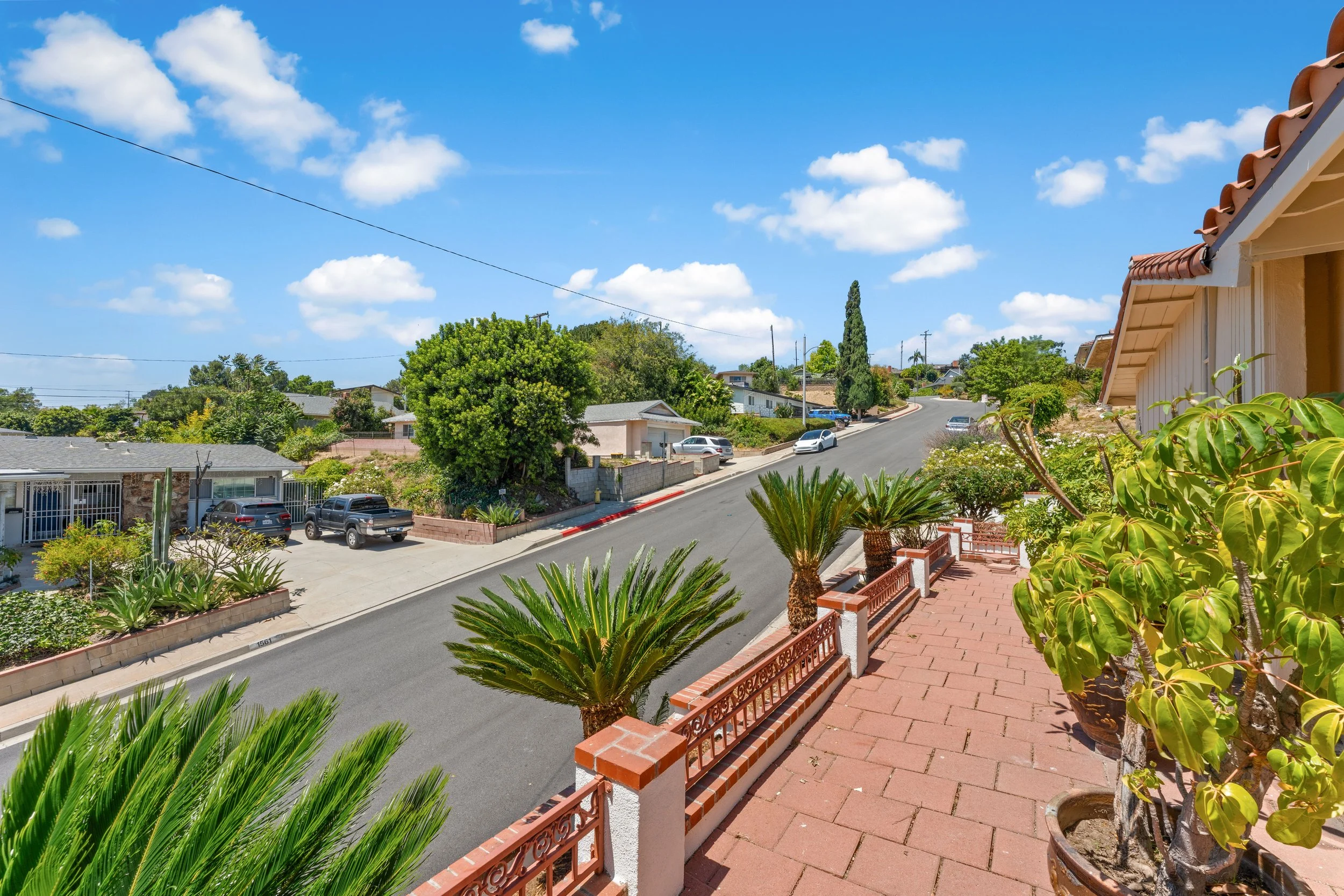
Listed by May Kunka of Compass in Monterey Park
Pricing a Monterey Park home slightly below its expected market value can sometimes generate more buyer interest and multiple offers, but intentionally pricing low doesn't guarantee a bidding war. In August 2026, only about 31% of Monterey Park homes sold above asking price, while the average home sold about 1% below list. The right strategy depends on your home's condition, price range, competition, location, and how likely buyers are to recognize value immediately.
You've probably seen it happen.
A house hits the market for:
$999,000
Everyone shows up.
There are people waiting outside the open house.
Offers start coming in.
A week later it's pending.
Then eventually you see the sale price:
$1,150,000.
And you think:
"That's what I want to do with my house."
I understand.
Multiple offers are great.
But there's one little problem.
We can't force buyers to have a bidding war.
We can create the conditions that encourage competition.
That's different.
Why Do Some Agents Price Homes Low?
The basic strategy makes sense.
If we believe buyers are likely to value a property around $1.1 million, perhaps we list it at $999,000.
Now buyers searching up to $1 million see it.
Buyers searching up to $1.1 million see it.
Maybe buyers who weren't originally considering the neighborhood see it.
The attractive price creates attention.
More attention creates showings.
More showings can create offers.
Multiple offers can create competition.
And competition can potentially push the final price above where we might have listed the home initially.
That's the theory.
Sometimes it works beautifully.
Sometimes it doesn't.
Not Every Monterey Park Home Is Selling Above Asking
This is where current market data becomes important.
Redfin's August 2026 data describes Monterey Park as somewhat competitive.
The average home sold for approximately 1% below asking and took about 38 days to sell.
About 30.6% of homes sold above list price, while 23.6% of listings experienced price drops.
The hottest properties performed very differently, potentially selling around 3% above asking and going pending in approximately 19 days.
That tells us something important:
There isn't one Monterey Park market.
Some homes are generating competition.
Others aren't.
Recent Monterey Park Sales Show Exactly What I Mean
Look at a few September sales.
A five-bedroom home on Fernbank Avenue was listed at $949,000 and sold for $1,020,000, about 7% above asking.
A home on Lunar was listed at $1.6 million and sold for $1.65 million, about 3% above asking.
Meanwhile, a condo on Mabel Avenue was listed at $688,000 and sold for $650,000, about 6% below asking.
Another condo on Garfield Avenue sold approximately 8% below asking after 121 days on market.
Same city.
Same general market.
Completely different results.
That's why I don't want to decide your pricing strategy based on what happened to one house down the street.
The List Price Is a Marketing Decision
This is something sellers don't always realize.
Your list price isn't simply:
"What is my house worth?"
It's also:
"At what price should we introduce this house to the market?"
Those questions are related, but they're not identical.
Suppose I believe your home is likely worth somewhere around $1.1 million.
We could potentially list at:
$999,000.
$1,049,000.
$1,095,000.
Maybe even another number depending on the property and current competition.
Each price creates a different first impression and potentially reaches a slightly different pool of buyers.
That's why pricing is part valuation and part strategy.
When Does Pricing Slightly Low Work Best?
I like this strategy most when I believe the property has obvious buyer appeal.
Maybe the home is:
Beautifully prepared.
In a highly desirable location.
Move-in ready.
Well photographed.
Easy to show.
At an attractive price point.
Offering something buyers have been waiting for.
If we already know the property checks a lot of boxes, an aggressive list price can potentially bring a large group of buyers through the door at the same time.
That's when things can get interesting.
When Does It Not Work?
Imagine we intentionally price a home low hoping for ten offers.
Then we get one.
Now what?
That's the risk sellers need to understand.
Maybe buyers don't like the layout.
Maybe the property needs more work than expected.
Maybe the location limits the buyer pool.
Maybe another listing came on the market at exactly the wrong time.
Maybe mortgage rates moved.
Maybe the price point simply doesn't have enough active buyers.
A low list price does not create demand where demand doesn't exist.
What If I List at $999,000 but I Really Want $1.1 Million?
Then we need to have a serious conversation before listing.
I don't want to advertise a price that you're completely unwilling to consider simply because we're hoping buyers bid against one another.
Our strategy needs to account for the possibility that the market doesn't respond the way we expect.
Before choosing an aggressive list price, I want you to understand both:
The potential upside.
and
The risk.
Could I Accidentally Sell Too Cheap?
This is one of sellers' biggest fears.
"What if we list low and nobody bids it up?"
That's exactly why the pricing decision can't be made casually.
We need to study:
Recent comparable sales.
Current competition.
Pending properties.
Buyer activity.
Your home's condition.
Your price range.
How similar listings have performed.
Then we decide how much confidence we have that the property will attract competition.
Pricing low shouldn't be gambling.
It should be a calculated strategy.
What About Pricing High So Buyers Have Room to Negotiate?
This is the opposite strategy.
Sometimes sellers tell me:
"Let's start high. Buyers can always make an offer."
The problem is that buyers don't always make an offer.
Sometimes they simply skip the house.
Current national research from Realtor.com has specifically highlighted the risks of "wishful pricing," where sellers choose aspirational asking prices instead of pricing around current market reality.
Its June 2026 pricing analysis found that the first four weeks of a listing are especially important. Homes selling around the four-week mark performed better relative to asking price than listings that remained on the market for substantially longer periods.
That's why:
"We can always lower it later."
isn't my favorite pricing strategy.
Yes, we can.
But we can't recreate the first day your listing hit the market.
Why Does Overpricing Hurt?
Let's say buyers believe your home is worth around $1 million.
You list at:
$1,150,000.
The buyers who can afford $1 million may not even see it because their search stops below your asking price.
The buyers searching around $1.15 million do see it.
But they're comparing your home with other properties around $1.15 million.
And yours may not compare well.
So neither group gets excited.
Then three weeks pass.
We reduce to $1,099,000.
Then $1,049,000.
Eventually we're near the number where buyers might have been interested from the beginning.
Except now we're no longer the exciting new listing.
We're the house with two price reductions.
That's not where I want to start.
What Does the Current Monterey Park Market Tell Us?
Realtor.com's August 2026 data puts Monterey Park's median listing price around $889,000 and median sold price around $887,500.
Homes sold for about 1% below asking on average, with a median market time of 43 days.
Redfin's methodology produces somewhat different figures, but it tells a similar story: Monterey Park is competitive enough that strong properties can still receive multiple offers, but the typical home isn't automatically selling above asking.
That means our pricing needs to be deliberate.
We can't price like it's 2021 and assume buyers will chase us.
But we also shouldn't automatically underprice every good house.
Price Brackets Matter More Than Sellers Realize
Let's say we're debating between:
$1,025,000
and
$999,000
That isn't merely a $26,000 difference.
Some buyers may have their search capped at $1 million.
Listing at $999,000 could potentially put your property in front of buyers who wouldn't see it at $1,025,000.
This is something I think about when choosing a list price.
Where are buyers searching?
What price ranges are crowded with competition?
Where might your home stand out?
Sometimes the psychological and search implications of a price are almost as important as the difference in dollars.
Should I Price at $999,000 Instead of $1 Million?
Maybe.
But I don't believe every listing needs to end in 999.
The number should have a reason behind it.
If we're choosing $999,000 because it expands the buyer pool and supports our overall strategy, great.
If we're choosing it because:
"That's what real estate agents do."
That's not enough for me.
What If We Get Multiple Offers?
Then the list price has done its job.
Now my focus changes.
I want to compare:
Purchase price.
Financing.
Down payment.
Deposit.
Appraisal contingency.
Inspection contingency.
Loan contingency.
Seller credits.
Buyer-broker compensation requests.
Closing timeline.
Possession.
Overall likelihood of closing.
The highest offer isn't automatically the best offer.
If one buyer offers $30,000 more but has much weaker financing and complicated contingencies, I want you to understand that.
Can We Counter Multiple Buyers?
Potentially.
If we receive multiple offers, we can evaluate the available options and determine the appropriate response.
Maybe we accept one.
Maybe we counter one buyer.
Maybe we counter several.
Maybe we ask for improved price or terms.
This is where having multiple genuinely interested buyers can give the seller leverage.
But I don't want to assume we'll have that leverage until the offers actually exist.
What If the Offers Don't Reach the Price I Wanted?
Then we have a decision to make.
We can evaluate the offers we received.
We can counter.
We can continue marketing.
Or we can reconsider the strategy.
But this is why I want sellers prepared before choosing an intentionally aggressive list price.
The market doesn't know what number you have in your head.
Buyers respond to the property and the value they perceive.
Should I Wait a Week Before Accepting an Offer?
Not automatically.
If an exceptional offer arrives quickly, waiting simply because we planned an offer deadline may not always be the best decision.
On the other hand, if we've generated substantial activity and several buyers are preparing offers, allowing the marketing process to play out may make sense.
Again, there isn't one rule.
I want to know what's actually happening.
Don't Confuse Selling Over Asking With Selling Over Value
This is probably the most important point in the entire article.
Imagine:
House A
Listed at $999,000.
Sold for $1,100,000.
That's $101,000 over asking.
Sounds amazing.
Now:
House B
Listed at $1,095,000.
Sold for $1,110,000.
Only $15,000 over asking.
Which seller did better?
House B.
The amount over asking is mostly a function of where the asking price started.
It doesn't tell us whether the seller maximized the property's value.
I care far more about:
What did the home sell for relative to its actual market value?
That's the number that matters.
Frequently Asked Questions
Should I price my Monterey Park home below market value?
Sometimes a slightly aggressive asking price can increase buyer attention and potentially generate multiple offers.
But it isn't appropriate for every property, and pricing below expected value doesn't guarantee buyers will bid the home up.
Do Monterey Park homes still get bidding wars in 2026?
Some do.
Redfin reports that about 30.6% of Monterey Park homes sold above asking in August 2026, and particularly competitive homes can still sell above list and move quickly.
How much over asking are Monterey Park homes selling for?
There isn't one useful citywide number for homes that receive multiple offers.
Recent September sales include a Fernbank Avenue property that sold about 7% above asking and a Lunar property that sold about 3% above asking. Other recent properties sold at or below list price.
Is it better to price a house too high or too low?
Neither should be the goal.
I want to choose the asking price that gives us the strongest position based on the property's likely value, buyer demand, competition, and our marketing strategy.
Will buyers make an offer if my house is overpriced?
They might.
But some buyers will simply move on to properties they perceive as better values.
That's why relying on buyers to "just make an offer" can be risky.
Can I reject an offer if it's above my asking price?
The existence of an offer above list price doesn't automatically determine what a seller must do. Your obligations depend on the agreements and circumstances involved.
If you're considering an aggressive pricing strategy, we should discuss how you'll feel if the offers don't reach the number you're hoping for before the property is listed.
Does selling over asking mean I got a great price?
Not necessarily.
A home deliberately listed below expected market value may sell substantially over asking without actually exceeding its market value.
The final sale price relative to comparable properties is more meaningful than the amount over list.
So What's the Next Step?
If you're thinking about selling your Monterey Park home, I'm not going to walk in and automatically tell you:
"Let's price it low and create a bidding war."
First, I want to understand the property.
Then I want to look at the competition.
What else is for sale?
What's pending?
What recently sold?
Which homes received multiple offers?
Which ones reduced their prices?
How long did they take to sell?
And most importantly:
Why did buyers respond differently to each one?
Then we can talk strategy.
Maybe your home is exactly the type of property where an aggressive list price could create a huge first weekend.
Maybe I'd rather price closer to expected market value.
Maybe your price range has limited inventory and we don't need to underprice at all.
After nearly 20 years helping homeowners throughout Monterey Park and the San Gabriel Valley, I've learned that the best pricing strategy isn't necessarily the one that produces the biggest "SOLD $100,000 OVER ASKING!" postcard.
It's the strategy that puts you in the strongest position to achieve the best overall result.
If you're considering selling your Monterey Park home, I'd be happy to prepare a pricing analysis and show you several potential listing strategies, including where I think we should price, what buyer response I'd expect, and what we'd do if the market responds differently.