Should I Get a Pre-Listing Appraisal Before Selling My Monterey Park Home?
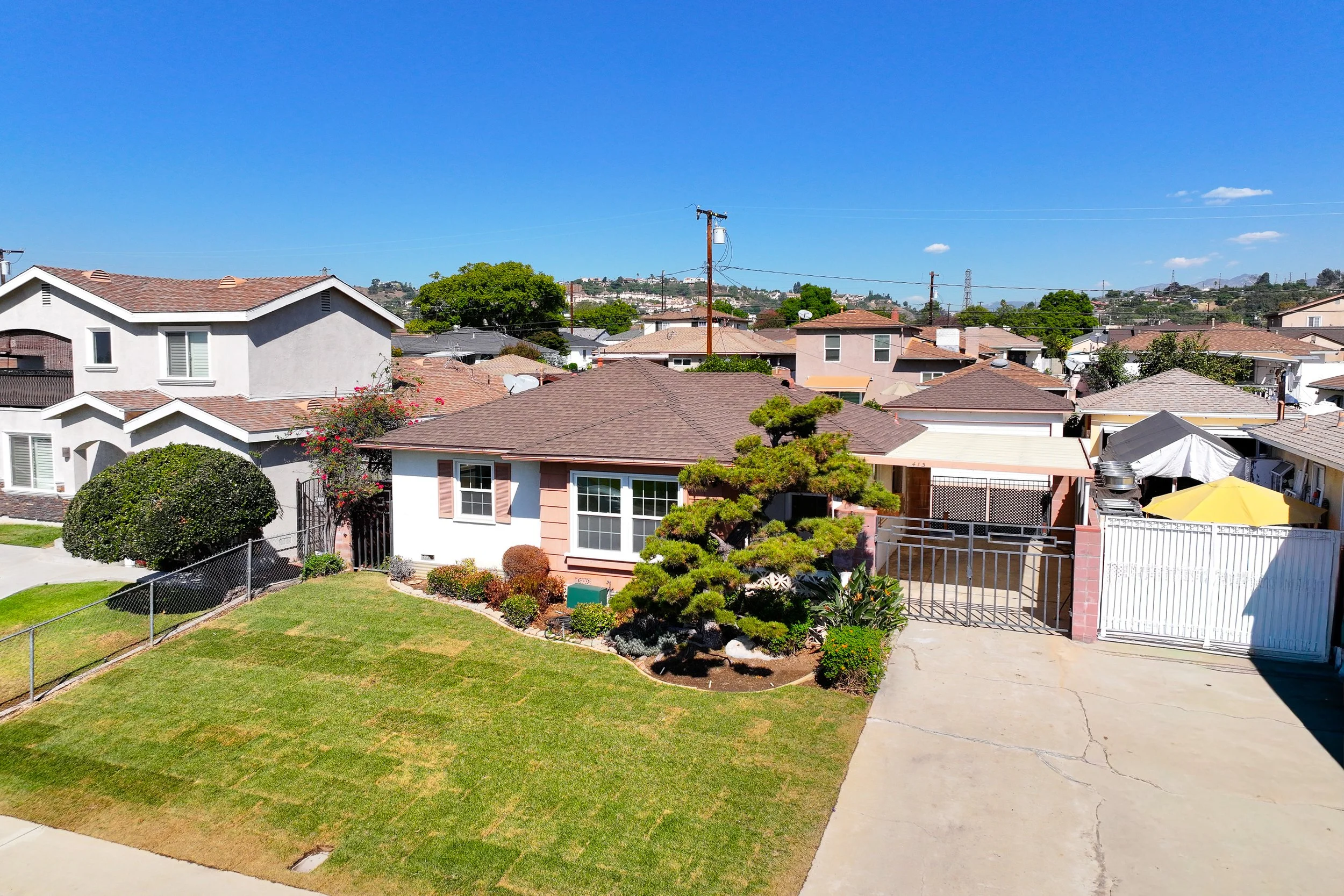
Listed by May Kunka, Realtor in Monterey Park
Most Monterey Park homeowners don't need to pay for a professional appraisal before listing their home. An experienced local real estate agent can prepare a comparative market analysis using recent sales, active listings, property condition, and current buyer demand to recommend a listing price. However, a pre-listing appraisal may be useful for unusual properties, inherited homes, estate planning, or situations where an independent opinion of value is needed. An appraisal is not a guarantee of the eventual selling price.
You've owned your Monterey Park home for 35 years.
Maybe you purchased it in the 1980s for a price that seems almost unbelievable today.
You've remodeled the kitchen, added a bathroom, and made improvements here and there.
Now you're thinking about selling.
But how do you figure out what the property is actually worth?
You could look at Zillow.
You could ask your neighbors what their homes sold for.
Or maybe someone suggests hiring an appraiser before putting the house on the market.
It's a reasonable idea.
After all, if you're selling what may be your largest financial asset, wouldn't it make sense to get an independent appraisal first?
Sometimes, yes.
But in many cases, it's an expense you don't actually need.
Let's talk about the difference between an appraisal and a real estate agent's market analysis, when an appraisal can be useful, and how I approach pricing homes in Monterey Park.
What Is a Pre-Listing Appraisal?
A pre-listing appraisal is a professional opinion of a property's value obtained before the home is offered for sale.
A licensed or certified real estate appraiser evaluates the property and uses appropriate valuation methods to develop an opinion of value as of a particular date.
For most single-family homes, the sales comparison approach is especially important.
That means looking at recently sold properties that are reasonably comparable to the subject property and making adjustments for meaningful differences.
The appraiser may consider the home's location, size, condition, improvements, lot characteristics, and other factors.
The result is an appraisal report with a supported opinion of value.
But it's important to understand what that opinion represents.
An appraisal is not a promise that your home will sell for that amount.
The actual sale price depends on what buyers are willing and able to pay when your home is on the market.
What's the Difference Between an Appraisal and a Comparative Market Analysis?
This is probably the most important distinction.
A comparative market analysis, often called a CMA, is typically prepared by a real estate agent to help determine a competitive listing price.
An appraisal is a formal valuation performed by a qualified appraiser.
Both may rely heavily on comparable sales.
But they serve different purposes.
An appraiser develops an opinion of value according to applicable professional standards and the assignment's intended use.
A real estate agent evaluates market activity to recommend a pricing and marketing strategy.
When I'm preparing a CMA for a Monterey Park seller, I'm not just looking at what homes sold for three months ago.
I'm also looking at what buyers can purchase right now.
What homes are currently competing with yours?
Which properties are sitting on the market?
Which ones received multiple offers?
And how does your property compare?
Those details are especially important when deciding how to position a home for sale.
Isn't an Appraisal More Accurate Than a Realtor's Opinion?
Not automatically.
An appraisal can be a valuable independent assessment.
But it still involves professional judgment, available data, and a specific effective date.
And the appraiser may not be evaluating the same question we're trying to answer.
For example, an appraiser might conclude that a property has a market value of $1,050,000.
That doesn't necessarily mean $1,050,000 is the best asking price.
Depending on current competition and buyer demand, we might recommend listing slightly below that figure to attract attention.
Or we might determine that the property has features buyers are currently willing to pay a premium for.
The appraisal helps estimate value.
The listing strategy determines how we present the property to the market.
They're related, but they're not identical.
How Do You Determine What a Monterey Park Home Is Worth?
I start with the property itself.
Not an online estimate.
I want to walk through the house and understand what makes it different.
How many bedrooms and bathrooms does it have?
What's the actual living area?
How functional is the floor plan?
What improvements have been completed?
How does the condition compare with other homes in the neighborhood?
And what is the lot like?
Monterey Park has a wide variety of properties.
You'll find smaller mid-century homes, larger hillside properties, homes with substantial additions, and houses that have remained in the same family for generations.
Even two properties on the same street can have meaningful differences.
Once I understand the house, I look at the market.
Recent closed sales.
Pending transactions, where reliable information is available.
Active listings.
Price reductions.
And how buyers have responded to similar properties.
The goal is to establish a realistic price range and recommend a strategy based on current conditions.
Why Are Online Home Value Estimates Sometimes Wrong?
Online estimates can be useful as a starting point.
But they don't always understand the property.
An algorithm may know the recorded square footage, bedroom count, and lot size.
It may not know that you recently renovated the kitchen.
Or that the roof needs replacement.
Or that the house has an unusual multilevel layout.
It may also struggle with additions, permit history, views, and other features that affect buyer demand.
In Monterey Park, where neighboring properties can vary considerably in layout and condition, those differences matter.
I wouldn't recommend setting a listing price based solely on an automated estimate.
When Does a Pre-Listing Appraisal Make Sense?
There are certain situations where I think an appraisal deserves serious consideration.
1. Your Property Is Unusual
Maybe your home has a very large lot.
Or an unconventional floor plan.
Perhaps it's a hillside property with exceptional views.
Or a house with two separate living areas that don't compare easily with nearby homes.
If there are very few comparable sales, an appraisal may provide another useful perspective.
That doesn't eliminate uncertainty, but it can help us evaluate the property more thoroughly.
2. You've Inherited a Home
Inherited property is another situation where an appraisal may be important.
But we need to distinguish between an appraisal for selling purposes and one needed for tax or estate administration.
For certain inherited properties, the property's fair market value at the date of death may be relevant to establishing its tax basis.
That value may be different from what the property is worth when you eventually sell it.
If you're handling an inherited Monterey Park home, I'd recommend discussing appraisal requirements with the estate attorney or tax professional.
A current pre-listing appraisal may not satisfy every estate or tax-related need.
3. Multiple Owners Disagree About Value
Let's say three siblings inherit their parents' house.
One believes it's worth $900,000.
Another thinks it's worth $1,200,000.
And the third has been looking at online estimates.
That can make decisions difficult.
An independent appraisal may help provide a common reference point.
It doesn't guarantee everyone will agree, but it can help move the conversation toward documented information.
4. You're Considering Selling to a Family Member
If you're thinking about selling a property to a relative, an independent appraisal may be helpful in documenting value.
However, family transactions can have tax, lending, and legal implications.
I'd want you to speak with the appropriate professionals before determining the transaction structure or price.
5. You Need a Valuation for Another Purpose
Sometimes homeowners need an appraisal for estate planning, divorce, financial reporting, or other circumstances.
Those situations may call for a specific type of appraisal with a defined effective date and intended use.
A standard real estate market analysis may not be sufficient.
How Much Does a Pre-Listing Appraisal Cost in Monterey Park?
Fees vary depending on the property and complexity of the assignment.
A straightforward single-family residence may cost several hundred dollars to appraise.
A complex property, unusual lot, or assignment requiring additional research may cost more.
I'd recommend requesting a quote from a qualified local appraiser.
But before spending the money, I'd ask why you need the appraisal.
If the goal is simply to determine a competitive asking price, we may already have enough market information to do that without the additional expense.
Will an Appraisal Help Me Get a Higher Sale Price?
Not necessarily.
A pre-listing appraisal can help establish an opinion of value, but it doesn't create buyer demand.
Let's say an appraiser values your Monterey Park home at $1,150,000.
You decide to list it for $1,200,000 because you believe the appraisal supports a strong price.
But buyers are comparing your property with similar homes listed around $1,100,000.
The appraisal doesn't obligate those buyers to pay more.
And it doesn't mean the property will sell for the appraised amount.
The market still has the final say.
That's why I focus on competitive positioning rather than trying to justify a particular number.
What If My Appraisal Comes in Lower Than I Expected?
First, I wouldn't panic.
I'd review the report and understand the appraiser's reasoning.
Which comparable sales were used?
Were the property characteristics accurate?
Were significant improvements considered?
Did the appraiser have the relevant information?
There may be legitimate reasons the value is lower than expected.
And occasionally, factual errors or missing information may need to be addressed.
But I wouldn't automatically assume the appraisal is wrong simply because the number is disappointing.
I'd compare it with the current market analysis and consider whether it changes our pricing strategy.
What If the Appraisal Comes in Higher Than the Market Analysis?
That's worth reviewing too.
Maybe the appraiser identified comparable sales or property features that deserve additional consideration.
But I still want to evaluate current competition.
A property may have appraised at a particular value based on the available data, yet buyers today may respond differently because of changes in mortgage rates, inventory, or demand.
An appraisal is one piece of information.
It isn't a substitute for understanding the current market.
Can I Use My Pre-Listing Appraisal to Help the Buyer's Appraisal?
You can make the report available, but the buyer's lender generally needs its own appraisal or other acceptable valuation process under the applicable loan program.
The lender's appraiser must develop an independent opinion.
They're not required to adopt the value in your pre-listing report.
And a higher pre-listing appraisal doesn't guarantee the buyer's appraisal will come in at the same amount.
If the buyer's lender requires an appraisal, that process still needs to be completed.
What If My Home Has Unpermitted Additions?
This is where things can become complicated.
Maybe your family added a bedroom decades ago.
Or converted a garage.
Or enclosed a patio to create additional living space.
The property may function beautifully.
But the legal status and characteristics of those improvements can affect valuation, financing, insurance, and buyer confidence.
An appraisal may help evaluate the property's market value, but it doesn't legalize unpermitted work.
Before listing, I'd want to review available permit records and understand how the improvements are represented.
We may also need to consult the appropriate building department or other professionals.
And we should be careful not to advertise unverified square footage or room counts as though they're confirmed.
What If My Home Has a Great View?
Views can absolutely influence buyer demand.
But determining how much value a particular view contributes isn't always straightforward.
A panoramic city view from a Monterey Park hillside property may be a meaningful feature.
But the value depends on the property, the view's quality, how it's enjoyed from the home, and comparable market evidence.
I'd want to look at sales of similar homes with and without views.
An appraiser may also analyze those differences.
But there's no universal formula that says a view adds a specific dollar amount to every house.
What If My House Has Been Extensively Remodeled?
Then we need to understand the improvements.
A beautifully remodeled home may attract buyers willing to pay more than they would for a similar property in original condition.
But the amount spent on renovations doesn't necessarily equal the amount added to market value.
If you spent $150,000 remodeling your home, that doesn't automatically mean it's worth $150,000 more.
Some improvements have a stronger effect on buyer appeal than others.
And buyers may value design choices differently.
I'd want to see the quality of the work, available permits, and how comparable remodeled homes have sold.
What If My Property Has an ADU?
An accessory dwelling unit can be an attractive feature.
But its contribution to value depends on several factors.
Is it legally permitted?
Is it completed and functional?
Does it have a separate entrance?
Is it occupied?
What are the rental possibilities?
And how do buyers in that neighborhood respond to properties with ADUs?
The appraisal may be more complex when there are limited comparable properties with similar secondary units.
A pre-listing appraisal could be useful in some cases, but I'd still want to evaluate the current market.
Does a Pre-Listing Appraisal Help With Pricing an As-Is Home?
It might, but it isn't always necessary.
If you're selling a property that needs substantial work, the condition will be a major factor.
A traditional buyer looking for a move-in-ready home may value the property differently from an investor planning a renovation.
We need to consider repair costs, comparable fixer-upper sales, and the likely buyer pool.
A pre-listing appraisal may provide additional information.
But I wouldn't rely on it alone to determine the asking price for a property with significant deferred maintenance.
Should I Get an Appraisal Before Making Repairs?
Usually, I'd start with a property walkthrough and market analysis.
Let's say you're thinking about spending $40,000 on improvements before selling.
I want to determine whether those improvements are likely to make financial sense.
Would fresh paint and landscaping be enough?
Should we replace the flooring?
Would a kitchen remodel be worthwhile?
Or would the home attract strong interest in its current condition?
A pre-listing appraisal may not answer all those questions.
A good preparation strategy should consider buyer preferences, likely costs, and the property's current market position.
Is a Pre-Listing Appraisal Worth It for a Typical Monterey Park Home?
In many cases, probably not.
If you're selling a fairly typical single-family home with enough recent comparable sales, a detailed market analysis may provide the information we need to recommend a listing price.
I'd rather have you spend money where it can make a meaningful difference.
That might be professional photography.
Landscaping.
Minor repairs.
Painting.
Or staging.
But if your property is unusual or you have a specific legal, financial, or family reason to obtain an independent valuation, an appraisal may be worthwhile.
Frequently Asked Questions
Do I need an appraisal before selling my home in Monterey Park?
No. Most homeowners aren't required to obtain a pre-listing appraisal. A real estate agent can prepare a comparative market analysis to help recommend a listing price.
How much does a home appraisal cost in Monterey Park?
Fees vary by property and assignment. A typical single-family home appraisal may cost several hundred dollars, while complex properties can cost more.
Is a Realtor's market analysis the same as an appraisal?
No. A comparative market analysis helps guide pricing and marketing decisions. An appraisal is a formal opinion of value developed by a qualified appraiser for a specific intended use.
Will a pre-listing appraisal guarantee my home's sale price?
No. The eventual selling price depends on buyer demand, competition, negotiations, and market conditions.
Can the buyer use my appraisal for their mortgage?
Generally, the buyer's lender must follow its own appraisal and valuation requirements. A seller's pre-listing appraisal typically doesn't replace that process.
Should I get an appraisal for an inherited home?
Possibly. An appraisal may be important for estate administration or tax-basis purposes. Consult the estate attorney or tax professional about the appropriate valuation date and requirements.
Is an appraisal helpful for a home with an ADU or unusual layout?
It can be, especially when comparable sales are limited. However, the appraisal should still be considered alongside current buyer demand and competing listings.
So What's the Next Step?
If you're thinking about selling your Monterey Park home and aren't sure what it's worth, I wouldn't recommend paying for an appraisal right away.
I'd start with a conversation and a walkthrough.
I want to see the property, understand its history, and learn about any improvements you've made.
Then I'll review recent sales, active listings, and current buyer activity to develop a realistic pricing strategy.
If the property has unusual features, multiple owners, estate-related considerations, or another reason an independent valuation would be helpful, we can discuss whether an appraisal makes sense.
But for most sellers, the first step is simply understanding the local market.
I've been helping homeowners throughout Monterey Park and the San Gabriel Valley since 2007, and I've worked with everything from beautifully remodeled properties to homes that haven't changed much in decades.
Every property has its own story.
And determining its value requires more than plugging an address into a website.
If you're considering selling your Monterey Park home, I'd be happy to help you understand what it may be worth, which improvements are worth considering, and how we can position it to attract the right buyers.