Should I Convert My Garage Into an ADU Before Selling My Monterey Park Home?
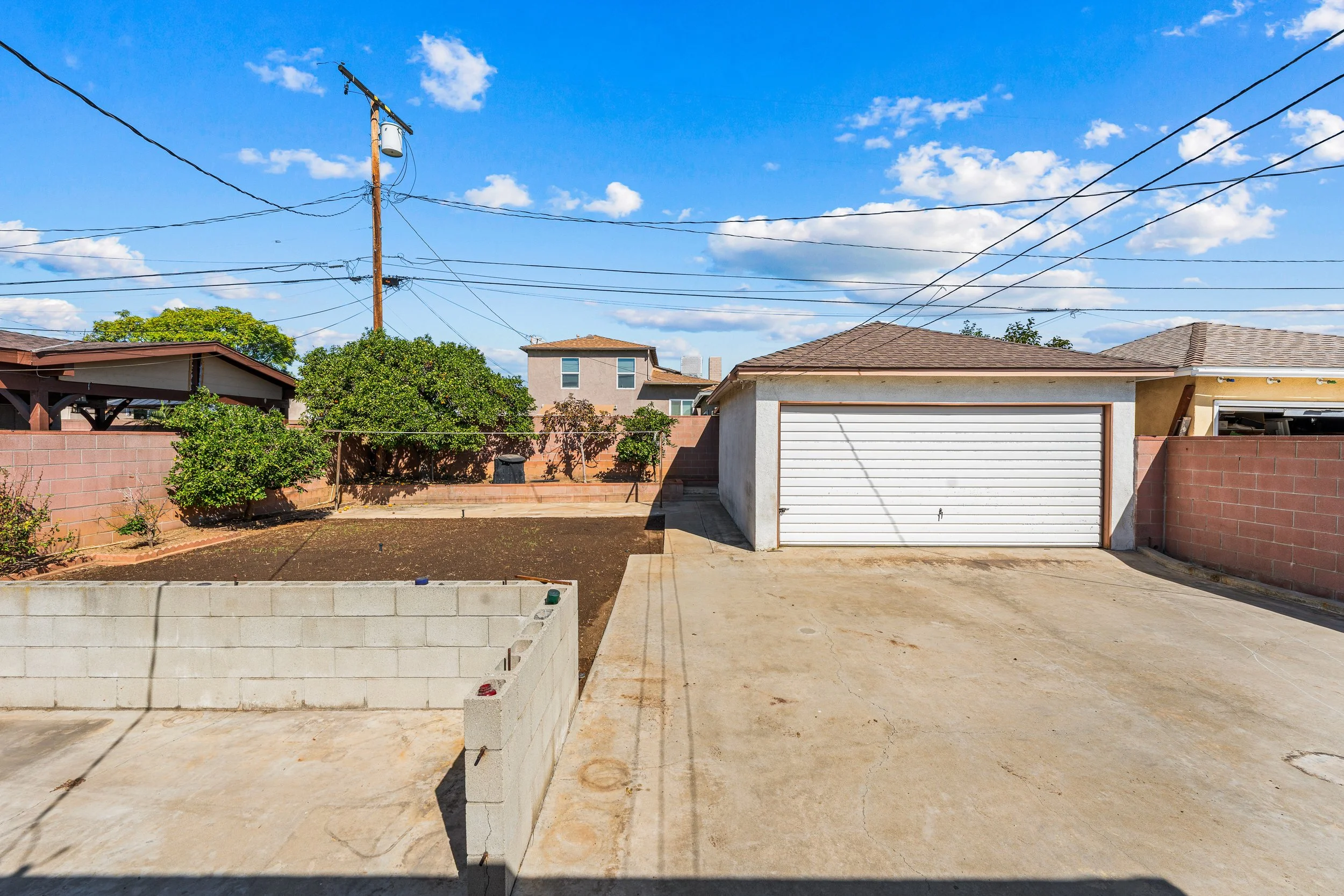
Listed by May Kunka, Realtor of Compass in Monterey Park
Converting your garage into an accessory dwelling unit (ADU) before selling your Monterey Park home may increase its appeal and value, but it isn't always worth the investment. A permitted ADU can attract buyers interested in multigenerational living or rental income. However, construction costs, permitting, project timelines, and the loss of garage parking can offset those benefits. For many homeowners planning to sell soon, marketing the property's verified ADU potential may be more practical than completing the conversion themselves.
If you own a home in Monterey Park, there's a good chance you've thought about what you could do with the garage.
Maybe it's a detached two-car garage that hasn't actually held a car in years.
Instead, it's filled with holiday decorations, old furniture, tools, and boxes you haven't opened since 2005.
And with all the attention accessory dwelling units have received in California, you've probably wondered whether converting that space into a small apartment could be a good investment.
Maybe you could rent it out.
Maybe your parents could live there.
Or maybe it could make your property more valuable when you eventually sell.
But what if you're already planning to sell in the next six months?
Should you spend the money to convert the garage into an ADU first?
That's a very different question.
And before committing to a construction project, I'd want to look carefully at the numbers.
Why Are ADUs Appealing to Monterey Park Buyers?
One of the reasons ADUs can be attractive is flexibility.
Monterey Park has many established neighborhoods with longtime homeowners and families who want to remain close to one another.
An additional living unit may appeal to someone who wants space for an older parent, an adult child, or extended family.
Other buyers may be interested in potential rental income.
And some simply like having a separate living area that provides more options over time.
A properly permitted ADU can offer independent living facilities, including areas for sleeping, cooking, and bathing.
But not every buyer wants an ADU.
Some would rather have a garage for parking, storage, or a workshop.
That's why I wouldn't assume converting a garage automatically makes a home more desirable to everyone.
Can You Legally Convert a Garage Into an ADU in Monterey Park?
In many cases, yes.
California law provides pathways for converting existing garages into accessory dwelling units, and Monterey Park has local development standards addressing converted ADUs.
But that doesn't mean every garage is automatically ready for conversion.
The existing structure, property configuration, utility connections, and proposed improvements still need to meet applicable requirements.
Monterey Park's published ADU guidelines recognize garage conversions and address matters such as building permits, development standards, and certain limited expansions for access.
Before spending money on plans, I'd recommend reviewing the property with the city's Planning and Building divisions and an experienced ADU designer or contractor.
You can start with the City of Monterey Park's official ADU information.
How Much Does It Cost to Convert a Garage Into an ADU?
This is where I want sellers to be especially realistic.
Converting an existing garage may be less expensive than constructing a completely new detached building.
But it's still a substantial construction project.
A garage generally wasn't originally built to function as a complete residence.
You may need to add a bathroom, kitchen, insulation, heating and cooling, electrical upgrades, plumbing, windows, and new interior finishes.
Depending on the existing structure, you might also need foundation work, roof repairs, sewer improvements, or utility upgrades.
A project that initially looks straightforward can become more expensive once construction begins.
I wouldn't rely on a generic online estimate.
I'd recommend getting detailed written bids from qualified contractors based on the actual garage and proposed design.
And I'd want to include a contingency for unexpected expenses.
Will Converting My Garage Into an ADU Increase My Home's Value?
Potentially.
A permitted, functional ADU may contribute to a property's market value.
But that doesn't mean the increase will equal the construction cost.
Let's say you receive a quote of $150,000 for a garage conversion.
You might assume the property will automatically be worth $150,000 more once the work is finished.
Unfortunately, real estate doesn't work that way.
Buyers consider the entire property.
The location.
The condition of the main house.
The size and functionality of the ADU.
The available parking.
The yard.
And what comparable properties have sold for.
A buyer who needs separate living quarters may place significant value on the ADU.
Another buyer might prefer the original garage.
I'd want to look at comparable sales of Monterey Park homes with permitted ADUs before deciding whether the investment makes sense.
What If I Spend $150,000 and the Home Only Sells for $100,000 More?
That's exactly the risk I want sellers to consider.
Imagine your home could sell for $1,000,000 in its current condition.
You spend $150,000 converting the garage.
After completing the work, the home sells for $1,100,000.
You've increased the sale price by $100,000, but spent $150,000 to get there.
And that doesn't include possible financing costs, carrying expenses, or the time spent managing construction.
In this hypothetical example, the conversion wouldn't have been a financially worthwhile project if your only goal was to sell.
Of course, the actual numbers could be different.
The important thing is evaluating the likely return before starting.
What If the ADU Could Generate Rental Income?
Rental income potential may make the property attractive to certain buyers.
For example, someone purchasing a Monterey Park home might want to live in the main residence and rent the ADU.
That additional income could help offset some ownership expenses.
But I'd be careful about making assumptions.
The amount an ADU can rent for depends on its size, condition, location, amenities, and current rental demand.
There are also expenses.
Insurance.
Utilities.
Maintenance.
Vacancy.
Repairs.
And property management, if applicable.
Rental activity must comply with applicable laws and local regulations.
Monterey Park's municipal code also contains restrictions on ADU rentals for terms shorter than 30 days.
If we're marketing potential rental income, I want to use realistic figures rather than promising a particular return.
Will Buyers Pay More for a Home With an ADU?
Some will.
But the amount varies.
A buyer who wants a separate residence for a family member may see tremendous value in having a completed ADU.
They may prefer purchasing a home where the work is already done rather than managing construction themselves.
Other buyers may be more interested in the potential to build one later.
And some won't need an ADU at all.
The property's price range matters too.
If we're selling a smaller Monterey Park home, buyers may be particularly focused on affordability.
Adding an expensive ADU could push the asking price into a range where buyers have other attractive options.
I want to make sure the improvements fit the market we're trying to reach.
What Happens to My Garage Parking?
This is one of the biggest trade-offs.
If you convert your two-car garage into living space, you lose those enclosed parking spaces.
Under California's ADU laws, local agencies generally cannot require replacement parking when an existing garage, carport, or covered parking structure is converted into an ADU.
But here's the important distinction.
Not being legally required to replace the parking doesn't mean buyers won't care about losing it.
A family with multiple vehicles may place significant value on having a garage.
Others may need secure storage.
And in certain neighborhoods, street parking can be inconvenient.
Before converting the garage, I'd want to consider the driveway, available parking, and what buyers in the neighborhood are likely to prefer.
What If My Garage Is Already Converted Into Living Space?
This is another situation I see with older properties.
Maybe a previous owner turned the garage into a bedroom.
Or added a bathroom and kitchenette years ago.
The space might look and function like an apartment.
But was the conversion permitted?
That's the first question.
A finished garage isn't automatically a legal ADU.
If the improvements were completed without permits, we need to investigate what was done and whether the space can be legally recognized or brought into compliance.
That may involve reviewing city records and consulting qualified professionals.
I wouldn't advertise an unpermitted garage conversion as a legal ADU without verification.
Should I Legalize an Existing Garage Conversion Before Selling?
Possibly.
If the garage is already substantially converted, obtaining the necessary approvals may be worth exploring.
But legalization can be more complicated than simply submitting paperwork.
The city may require plans, inspections, or changes to existing construction.
Some concealed work may need to be evaluated.
And depending on the condition, significant improvements could be necessary.
Before deciding, I'd want to understand the estimated cost, timeline, and likelihood of approval.
Sometimes completing the process makes sense.
Other times, selling the property with appropriate disclosures and allowing the buyer to evaluate the space may be more practical.
How Long Does a Garage Conversion Take?
That depends on the project.
You'll need time for planning, design, permitting, contractor scheduling, construction, inspections, and final approvals.
California law establishes certain timelines for local agencies to act on substantially complete ADU applications, but those statutory review periods aren't a guarantee that your entire project will be finished within that time.
Plan revisions, utility coordination, construction conditions, and contractor availability can all affect the schedule.
If you're hoping to sell in three months, I would be cautious about starting a major conversion.
You don't want to find yourself with a half-finished project when you're ready to move.
What If I Need to Sell Before Construction Is Finished?
An unfinished ADU can complicate the sale.
Buyers may be uncertain about the remaining construction costs.
Lenders may have concerns about incomplete work.
And the property may not show as well while construction is underway.
You may also need to address open permits and outstanding inspections.
That doesn't mean an unfinished project is impossible to sell.
But it can create additional complications.
If your timeline is uncertain, I'd want to think carefully before starting construction.
Could I Just Get ADU Plans Approved Before Selling?
This may be an alternative worth considering.
Instead of completing the conversion, you might explore obtaining plans or approvals.
That could help demonstrate the property's development possibilities.
But I'd still want to evaluate the cost.
And buyers should understand that approved plans don't necessarily eliminate future expenses, conditions, or permit requirements.
Approvals may also have expiration dates or other limitations.
I'd want to verify what has actually been approved and whether those approvals can be used by a future owner.
Is It Better to Advertise ADU Potential Instead?
For many sellers, this may be the more practical approach.
Let's say you have a detached garage behind your Monterey Park home.
The garage is in decent condition.
There's room in the backyard.
And you believe a conversion might be possible.
Rather than spending a substantial amount on construction, we can investigate the property's ADU potential and market it accurately.
That gives buyers the opportunity to explore the possibilities.
Maybe someone wants a rental unit.
Maybe another buyer wants space for an older parent.
Or perhaps someone would prefer to keep the garage exactly as it is.
By leaving the decision to the buyer, we preserve flexibility.
But I want to be clear.
ADU potential isn't the same as an approved ADU.
Any marketing claims should be supported by appropriate research, and buyers should independently verify feasibility.
What If My Lot Is Small?
A smaller lot doesn't automatically eliminate ADU possibilities.
California's ADU laws limit certain local restrictions, including minimum lot size requirements.
However, the property's physical characteristics and applicable building standards still matter.
For example, the garage may have structural issues.
Or the site may have utility, access, or other constraints.
I'd want to evaluate the actual property before making promises about what can be built.
What If the Garage Is Detached?
Detached garages can be appealing conversion candidates because they already provide some separation from the main residence.
That may be attractive to buyers interested in privacy or independent living arrangements.
But the existing structure still needs to be evaluated.
Does it have an adequate foundation?
Is the roof in good condition?
Can plumbing and sewer connections be installed?
Will the layout accommodate a functional kitchen and bathroom?
And what upgrades are necessary to meet applicable building requirements?
A detached garage may be a good starting point, but it isn't automatically a simple project.
What If the Garage Is Attached to the House?
An attached garage may also qualify for conversion under applicable ADU rules.
But the design can be different.
We'd need to consider entrances, separation between living areas, utilities, fire safety, and the overall floor plan.
Depending on the configuration, there may also be questions about whether the proposed project is an ADU or a junior accessory dwelling unit.
Those are different types of units with different requirements.
I'd want a qualified designer and the city to evaluate the options before deciding which approach makes sense.
What About Property Taxes After Adding an ADU?
Adding an ADU may affect the property's assessed value.
In California, qualifying new construction can result in an assessment of the newly added improvements without necessarily causing a reassessment of the entire existing property.
However, the specific tax consequences depend on the circumstances.
If you're planning to sell immediately after completing the ADU, the tax considerations may be different from those of a homeowner who intends to keep the property.
I'd recommend speaking with the Los Angeles County Assessor's Office or a qualified tax professional rather than assuming the project will have no property tax impact.
Could an ADU Make My Home Harder to Sell?
It's possible.
That might sound surprising, but not every improvement appeals to every buyer.
Imagine a family looking for a traditional three-bedroom home with a two-car garage and a usable backyard.
They find your property, but the garage has been converted into a small apartment.
Now there's less storage, no enclosed parking, and potentially less privacy in the backyard.
That buyer may prefer a different home.
On the other hand, a multigenerational household may see the ADU as exactly what they've been searching for.
The key is understanding your likely buyer pool.
What If I'm Selling My Parents' Monterey Park Home?
This is a particularly important consideration.
Maybe your parents have owned the home for 40 years.
The garage is full of belongings.
And the family is trying to decide whether to renovate, convert the garage, or sell the property in its current condition.
I generally wouldn't recommend jumping into a major ADU project without evaluating the alternatives.
There may already be enough demand for the home as it is.
And the family may prefer to avoid the time, expense, and responsibility of managing construction.
Sometimes a few improvements to the main house are a much better use of money.
Other times, the property has genuine development potential that we can highlight in the marketing.
The best strategy depends on the home and the family's goals.
How Would I Decide Whether the Conversion Is Worth It?
I'd start by comparing three possible scenarios.
Scenario 1: Sell the property as it is.
We evaluate the current condition, recent comparable sales, and likely buyer demand.
Scenario 2: Make modest improvements and market the ADU potential.
We focus on cleaning, repairs, landscaping, and presenting the property well while providing accurate information about potential future uses.
Scenario 3: Complete a permitted garage conversion before selling.
We obtain construction estimates, evaluate the timeline, and compare likely sale prices of similar homes with completed ADUs.
Then we look at the numbers.
If the completed conversion is likely to increase the sale price by less than the total project cost, I'd have a hard time recommending it purely as a resale strategy.
If the numbers suggest a meaningful benefit, we can explore it further.
But I want that decision based on evidence, not just the assumption that more living space always means more money.
Frequently Asked Questions
Does converting a garage into an ADU increase home value in Monterey Park?
It can. A permitted ADU may attract buyers interested in rental income or multigenerational living, but the added value depends on the property and comparable sales.
Is it worth converting my garage into an ADU before selling?
Not always. Construction costs and project timelines may outweigh the increase in sale price, especially if you're planning to sell soon.
Can I convert my garage into an ADU in Monterey Park?
Many garage conversions are permitted under California and Monterey Park ADU regulations, subject to applicable building and development requirements. Verify feasibility for the specific property.
Do I have to replace garage parking if I convert it into an ADU?
California law generally prohibits local agencies from requiring replacement parking when a garage, carport, or covered parking structure is converted into an ADU.
Can I sell my home with an unpermitted garage conversion?
Yes, but known material conditions and permit issues may need to be disclosed. The unpermitted space shouldn't be represented as a legal ADU without verification.
Can I advertise my property as having ADU potential?
Yes, provided the marketing is accurate and doesn't imply approvals or guaranteed feasibility that haven't been established.
Can a buyer rent out a garage ADU in Monterey Park?
A legally permitted ADU may be rented subject to applicable laws and restrictions. Monterey Park's municipal code includes a minimum rental term of 30 days for ADUs.
So What's the Next Step?
If you're thinking about selling your Monterey Park home and wondering whether to convert the garage into an ADU, I'd recommend starting with a market analysis before calling a contractor.
I want to see the property.
How large is the garage?
What's its condition?
How much parking would you lose?
What does the backyard look like?
And most importantly, how does your home compare with other properties currently available?
Then we can look at recent sales of homes with ADUs and determine whether the potential increase in value is likely to justify the cost.
I've been helping homeowners throughout Monterey Park and the San Gabriel Valley since 2007, and I've learned that the most expensive improvement isn't always the one that produces the best result.
Sometimes the smartest decision is to complete a renovation.
Other times, it's to make a few thoughtful repairs and leave the bigger projects to the next owner.
If you're considering selling your Monterey Park home, I'd be happy to walk through the property with you, discuss its ADU potential, and help you determine which approach makes the most financial sense.
Because the goal isn't simply to spend money improving the property.
It's to make decisions that help you achieve the best possible outcome when you sell.