How Do I Know If a Pasadena Home Is Overpriced?
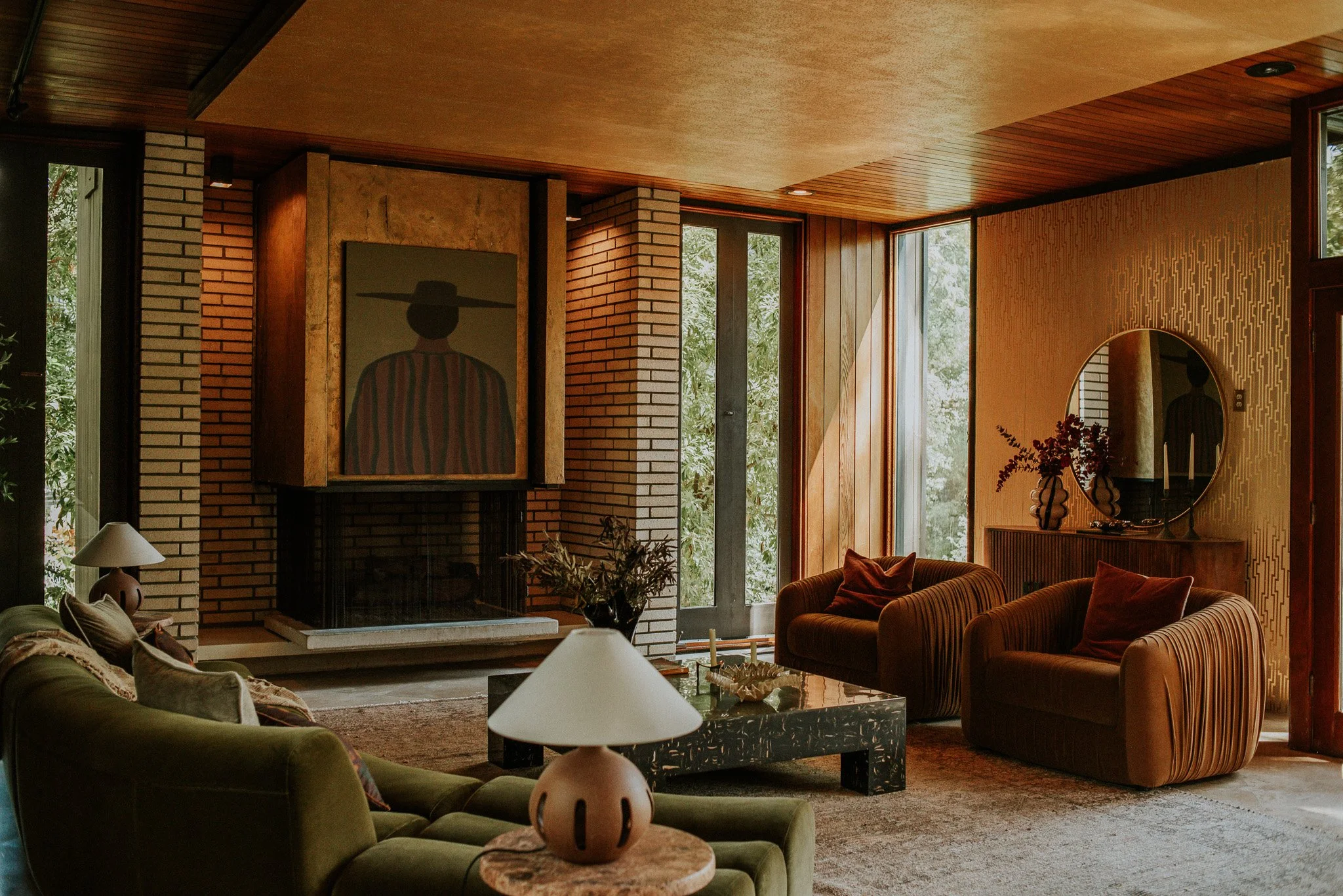
Listed by Bryony Atkinson of Maisonre and Weston Listlefield of Christie’s
The asking price doesn't tell you what a Pasadena home is actually worth. To determine whether a property is overpriced, I look at recent comparable sales, current competition, condition, location, lot size, architecture, days on market, price reductions, and features that make the home better or worse than nearby properties. In Pasadena especially, price per square foot alone can be misleading because two similarly sized homes can have dramatically different architecture, condition, lots, and locations.
You find a Pasadena house listed for:
$1,295,000.
Looks great.
But then comes the question:
"Is it actually worth $1,295,000?"
That's a much harder question.
Because sellers can ask whatever they want.
The list price isn't an appraisal.
It isn't a guarantee.
And it definitely isn't proof of value.
Sometimes a home is intentionally priced low to create competition.
Sometimes it's priced right around market value.
And sometimes the seller is simply hoping someone will pay too much.
My job is to help you figure out which one we're looking at.
Start With the Most Important Question: What Have Similar Homes Actually Sold For?
This is where I start.
Not Zillow.
Not the listing agent's description.
Not the price the seller paid 20 years ago.
Comparable sales.
I want to find recently sold homes that buyers would reasonably have considered alternatives to the property we're evaluating.
Ideally, I'm looking for homes with similarities in:
Location
Square footage
Lot size
Bedroom and bathroom count
Condition
Architecture
Age
Garage and parking
Views
Outdoor space
School boundaries where relevant
Other significant features
The closer the comparison, the more useful it becomes.
Pasadena Can Be Really Difficult to Comp
This is one of the things I love about Pasadena.
It's also one of the things that makes valuing homes here more complicated.
You might have:
A 1920s Spanish home.
A Craftsman.
A Tudor.
A mid-century home.
A post-and-beam.
A traditional home.
A newer construction property.
Sometimes all within a relatively small area.
Two homes might both have:
3 bedrooms
2 bathrooms
1,800 square feet
But that doesn't make them equal.
One may have beautifully preserved original details, an incredible lot, mature landscaping, and a thoughtful renovation.
The other may need $200,000 worth of work.
A spreadsheet won't completely explain that difference.
Don't Rely Too Heavily on Price Per Square Foot
Buyers love this number.
"This one is $850 per square foot and that one sold for $750. This house is overpriced."
Maybe.
But not necessarily.
Price per square foot can be useful as one data point.
It isn't a valuation formula.
Imagine two Pasadena homes.
House A
1,200 square feet.
Beautifully renovated.
Great street.
Large lot.
Fantastic backyard.
Original character.
House B
2,000 square feet.
Needs major updating.
Busy location.
Awkward layout.
Smaller lot.
House A may easily sell for a much higher price per square foot.
That doesn't mean buyers overpaid.
Look at What Is for Sale Right Now
Closed sales tell us what buyers were willing to pay.
Active listings tell us what your alternatives are today.
That's important.
Let's say the house you're considering is listed at:
$1,400,000
There are three comparable homes currently available between:
$1,250,000 and $1,325,000
Now I have questions.
Why is this one worth more?
Better condition?
Better lot?
Better architecture?
Better location?
More usable space?
Or is the seller simply optimistic?
Buyers don't evaluate homes in a vacuum.
They're comparing them with everything else they can buy.
Pending Sales Are Extremely Valuable Too
I pay a lot of attention to pending properties.
Why?
Because they tell us where buyers are making decisions right now.
A closed sale may have gone under contract a month or two ago.
A pending listing may have received its offer last week.
We may not know the final sale price yet, but we can still learn from it.
How quickly did it go pending?
Was it listed at $1.2 million?
Did it have multiple offers?
Did the listing agent indicate strong activity?
That helps us understand current demand.
Days on Market Can Tell Us Something
Suppose a Pasadena home has been listed for:
3 days.
We may have very little information about how buyers are responding.
Now suppose it's been listed for:
73 days.
That's different.
Zillow's latest Pasadena data shows homes going pending in a median of approximately 24 days as of August 31, 2026.
That doesn't mean every home sitting longer than 24 days is overpriced.
But if a property has been available significantly longer than competing homes, I want to understand why.
Look at the Price History
This is one of the first things I'm checking.
Maybe the home came on the market at:
$1,499,000
Then reduced to:
$1,425,000
Then:
$1,375,000
Now we're at:
$1,325,000
That tells me something.
It doesn't automatically mean the current price is a bargain.
It tells me the seller has already received feedback from the market and adjusted.
Now I want to determine whether $1,325,000 finally makes sense.
A Price Reduction Doesn't Automatically Mean a Deal
This is important.
Buyers sometimes see:
$100,000 PRICE REDUCTION!
and immediately think they're getting a discount.
But what if the house started $200,000 too high?
A price reduction is relative to the seller's original asking price.
It isn't necessarily relative to the property's value.
I care about:
Where is the price now compared with the comps?
Not:
How far has the seller come down?
The Current Pasadena Market Makes This Especially Important
Pasadena is still a competitive market, but buyers aren't reacting the same way to every property.
Zillow reports that 53.8% of Pasadena sales closed above asking price in its latest available data.
At the same time, 38% sold below asking.
That's a pretty good illustration of what's happening.
Some properties are still attracting serious competition.
Others aren't.
So when someone tells you:
"Pasadena homes always sell over asking."
That's simply not true.
We need to evaluate the specific house.
Don't Assume a Home Is Overpriced Just Because It's Over Asking From the Last Sale
Maybe the seller purchased it five years ago for $900,000 and now wants:
$1,300,000.
That doesn't automatically mean they're being unrealistic.
Maybe the market changed.
Maybe they renovated.
Maybe they added square footage.
Maybe the previous sale was below market.
Maybe the property is genuinely worth $1.3 million today.
What the seller paid can be interesting.
But today's market determines today's value.
And Don't Assume Renovation Cost Equals Added Value
This comes up all the time.
A seller may say:
"We spent $300,000 remodeling this house."
Okay.
That doesn't automatically make the house worth $300,000 more.
Maybe buyers love the renovation.
Maybe they don't.
Maybe the seller chose extremely expensive finishes that the market won't fully reward.
Maybe they improved things that desperately needed improving.
Cost and value aren't always the same.
Architecture Can Matter a Lot in Pasadena
This is something a generic online valuation tool can struggle with.
Pasadena buyers often care about architecture.
A beautifully preserved Craftsman may command a premium.
So can an exceptional Spanish home.
Or a notable mid-century property.
Or a home designed by a recognized architect.
Original built-ins.
Woodwork.
Windows.
Tile.
Beams.
Courtyards.
Details matter.
Sometimes a home that looks expensive on paper makes much more sense once you understand what it is.
And sometimes a seller thinks "historic" automatically means "valuable."
That's not necessarily true either.
We still need comps.
Lot Size Matters, But So Does the Lot Itself
A 10,000-square-foot lot sounds great.
But is it usable?
Flat?
Private?
At the top of a hill?
Mostly hillside?
Does it have a pool?
Great landscaping?
An awkward shape?
A beautiful view?
Numbers only tell part of the story.
Two lots with identical square footage can have very different value to a buyer.
Location Within Pasadena Matters
This is another reason broad citywide averages only get us so far.
Pasadena is a large and varied city.
Even within the same ZIP code, values can change significantly depending on the street and immediate surroundings.
A quiet interior street can feel very different from a busy arterial.
A property near desirable shops and restaurants may appeal differently than one farther away.
Views matter.
Noise matters.
Neighborhood character matters.
So when I'm pulling comps, I'm not simply searching:
"All Pasadena homes between 1,700 and 1,900 square feet."
I want to know where they are.
What About Online Home Value Estimates?
They're useful as a reference point.
That's about as far as I take them.
Zillow currently estimates Pasadena's average home value at approximately $1.19 million, but even Zillow breaks Pasadena down into very different ZIP-code value levels.
And your home isn't "the average Pasadena home."
Automated estimates don't walk through the property.
They don't stand in the backyard.
They don't see the quality of the renovation.
They don't smell moisture.
They don't hear the freeway.
They don't understand why one original 1950s kitchen is charming and another is simply outdated.
I use data.
But I also use the actual house.
How Do I Know If a Seller Is Just Testing the Market?
Sometimes the signs are there.
Maybe the price is significantly above recent comps.
Maybe the seller has owned the property forever and isn't particularly motivated.
Maybe the listing agent tells us directly that they're only selling if they get their number.
That's useful information.
It doesn't mean we can't make an offer.
It means I want you to understand who we're negotiating with.
Should I Still Offer on an Overpriced Home?
Absolutely, if you like it.
The seller's asking price doesn't dictate what we have to offer.
If I believe the comps support:
$1,200,000
and the seller is asking:
$1,325,000
we can still make an offer.
The question becomes:
What price and terms make sense based on the property and your goals?
Maybe we offer $1.2 million.
Maybe slightly more.
Maybe less.
Maybe we wait.
The strategy depends on the situation.
How Low Is Too Low?
There's no universal percentage.
This is why I don't love rules like:
"Always offer 10% below asking."
Ten percent below what?
A home deliberately listed below market?
A perfectly priced home?
An overpriced home that's been sitting for four months?
Those are completely different situations.
The asking price is our starting point.
The comps help us determine value.
What If the Seller Won't Budge?
Then you have a decision.
Maybe you love the house enough to pay more.
Maybe the comps give you confidence that their number isn't unreasonable.
Maybe we decide you're comfortable paying a premium because this particular property is difficult to replace.
Or maybe we walk away.
One of the most important things I tell buyers is:
A home can be worth more to you than it is to someone else.
That's okay.
But I want you to know when you're making that decision.
Paying Over Market Value Isn't Always the Same as Making a Mistake
This might sound strange coming from a Realtor.
Suppose you find a very unusual Pasadena home.
Perfect street.
Architecture you love.
Right layout.
Amazing yard.
You've been searching for nine months and haven't seen anything similar.
Maybe the comps suggest:
$1,500,000
but you're willing to pay:
$1,540,000
because losing it over $40,000 would bother you more than paying the additional amount.
That's your decision.
My job is to tell you:
"Here's what I believe the market supports."
Then you decide what the home is worth to you.
That's very different from blindly overpaying because nobody ran the numbers.
What About the Appraisal?
If you're financing the purchase, the lender may require an appraisal.
The appraiser will independently evaluate the property for the lender.
But I don't want the appraisal to be the first time anyone asks whether your purchase price makes sense.
We should have already done that analysis before writing the offer.
And remember:
The appraisal is for the lender.
Our comparable-market analysis is part of helping you decide what you're comfortable offering.
Frequently Asked Questions
How can I tell if a Pasadena home is overpriced?
Compare the asking price with recent sales of genuinely similar properties, then account for condition, location, lot, architecture, upgrades, current competition, and market activity.
Don't rely on asking price or price per square foot alone.
Are Pasadena homes still selling over asking price?
Yes, many are, but not all.
Zillow's latest data shows 53.8% of Pasadena sales above asking and 38% below asking.
That makes property-specific analysis especially important.
Is price per square foot a good way to value a Pasadena home?
It can be a useful comparison tool, but it shouldn't be used alone.
Lot quality, condition, architecture, location, layout, and other features can create significant differences between similarly sized homes.
Is a price reduction a sign that a home is a good deal?
Not necessarily.
A price reduction only tells you the seller lowered the asking price.
You still need to compare the new price with the property's actual market value.
Should I make an offer on an overpriced home?
You can.
If the home interests you, we can determine what the comparable sales support and submit an offer based on the property's value rather than automatically accepting the seller's asking price.
How much below asking should I offer on an overpriced house?
There isn't one percentage that works for every property.
The appropriate offer should be based on comparable sales, current competition, market time, condition, seller motivation, and your interest in the home.
Can a home be worth paying more than the comps?
Potentially.
A unique property may be difficult to compare, and an individual buyer may decide a particular home is worth paying a premium for.
The important thing is knowing what the available market evidence supports so you're making that choice intentionally.
So What's the Next Step?
If you send me a Pasadena listing and ask:
"Do you think this is overpriced?"
I'm not going to look at the asking price and immediately say yes or no.
I'm going to dig.
What recently sold nearby?
What's currently available?
What's pending?
How long has this property been listed?
Has the seller reduced the price?
How does the condition compare?
What about the lot?
The location?
The architecture?
Are there improvements that genuinely add value?
Is there something about the house that the numbers aren't capturing?
Then I'll give you a range of where I think the property makes sense.
Not because I can magically determine the exact value down to the dollar.
Nobody can.
But I can give you enough information to make an educated decision.
Pasadena's latest numbers are a perfect example of why this matters. More than half of recent sales have closed above asking, while a substantial portion have sold below asking.
The market is rewarding some properties very aggressively and pushing back on others.
After nearly 20 years helping buyers throughout Pasadena and the San Gabriel Valley, I've learned that one of the most valuable things I can do isn't simply help you write an offer.
It's help you understand why we're offering that number in the first place.
If you're looking at a Pasadena home and aren't sure whether the asking price makes sense, send it to me. I'll look at the recent comparable sales, current competition, and the property itself so we can figure out what I'd be comfortable paying before we decide how to structure the offer.