How Much Are Closing Costs When Buying a Home in Monterey Park?
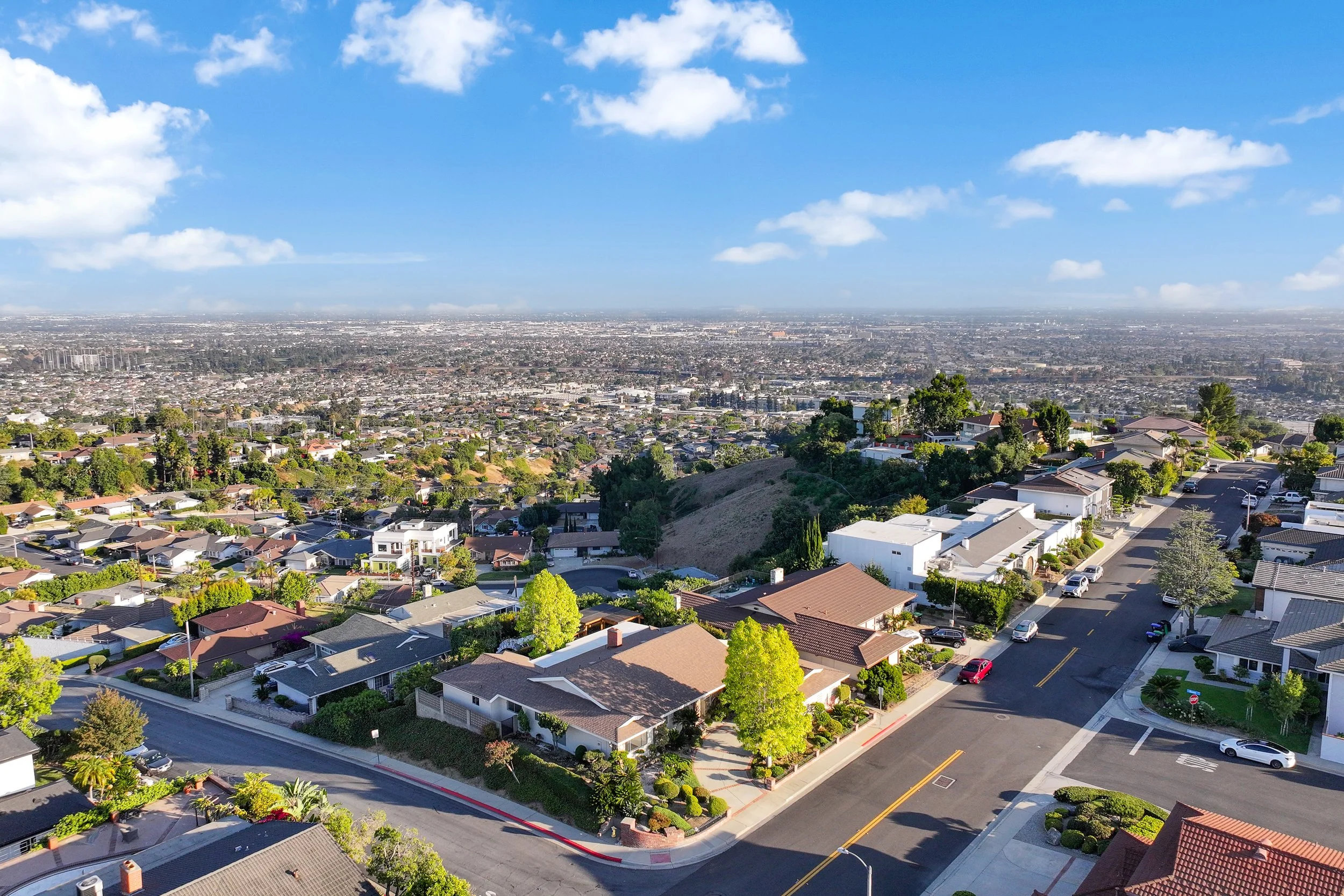
Listed by May Kunka of Compass in Monterey Park
When buying a home in Monterey Park, your down payment isn't the only cash you'll need. California's Department of Real Estate recommends budgeting an additional 3% to 7% of the purchase price for closing costs, although your actual expenses can be lower or higher depending on your loan, prepaid taxes and insurance, escrow and title charges, and the specific terms of your purchase.
You saved:
$150,000.
You're planning to put:
$150,000 down.
So you can use every dollar of that toward your down payment, right?
Not so fast.
One of the biggest surprises for first-time buyers is realizing that the down payment is only one part of the money needed to purchase a home.
There are closing costs.
Inspections.
Appraisal.
Insurance.
Prepaid expenses.
And eventually, if the property is reassessed at a higher value, there may be a supplemental property tax bill arriving after you own the house.
This is why one of the first things I want to know isn't simply:
"How much do you have for your down payment?"
It's:
"How much cash do you have available for the entire purchase?"
Those are two very different questions.
What Are Closing Costs?
Closing costs are the expenses associated with completing your home purchase beyond the purchase price itself.
California DRE lists common buyer closing expenses such as:
Prepaid property taxes
Homeowners insurance
Title and escrow charges
Lender origination and underwriting fees
Appraisal
Pest inspection or other inspection-related costs
Other transaction-specific expenses
Your lender's Loan Estimate should provide estimated closing costs earlier in the financing process, while the Closing Disclosure provides a detailed accounting as you approach closing.
That's why I don't want buyers relying on a random online calculator once we're actually preparing to purchase.
Your lender and escrow can give us numbers based on your transaction.
How Much Should I Budget for Closing Costs in Monterey Park?
California DRE recommends that buyers generally plan for an additional 3% to 7% of the purchase price for closing costs, separate from the down payment.
But that's a planning range.
It doesn't mean every Monterey Park buyer will write a check for exactly 5% of the purchase price.
Your costs depend on things like:
Your loan.
Interest rate.
Whether you're paying points.
Insurance.
Property taxes.
Escrow.
Title.
The day of the month you close.
Credits negotiated with the seller.
And other details.
So I use percentages for early planning.
Once you're serious about buying, I want an actual estimate.
What Would 3% to 7% Look Like?
Let's put that broad planning range into real numbers.
On an $800,000 home:
3% = $24,000
7% = $56,000
On a $1,000,000 home:
3% = $30,000
7% = $70,000
On a $1,200,000 home:
3% = $36,000
7% = $84,000
Again, this does not mean your actual closing costs will necessarily land at those numbers.
But it shows why we shouldn't use every dollar of your savings for the down payment and assume we're finished.
Is My Earnest Money Deposit Another Closing Cost?
Not exactly.
This is an important distinction.
Let's say you're buying for:
$1,000,000
You put down a:
$30,000 earnest money deposit
That doesn't generally mean you need your down payment plus closing costs plus another $30,000 that disappears.
Your deposit is typically credited toward the funds you need for the transaction.
California DRE describes an earnest money deposit as typically 1% to 3% of the home price and notes that it goes toward the purchase.
Think of it as money you're bringing into escrow earlier in the process.
What About the Down Payment?
That's separate from closing costs.
If you're buying a $1 million home with 20% down:
Down payment: $200,000
Then we still need to account for closing costs and other expenses.
If you're putting 10% down:
Down payment: $100,000
Again, closing costs are separate.
This is why saying:
"I have $200,000 saved, so I can put 20% down on a million-dollar house"
may not be the complete picture.
Maybe you can.
But what money is left afterward?
I Don't Want You Draining Your Savings Account
This is probably the bigger conversation.
Just because you can put more money down doesn't always mean you should use every available dollar.
After closing, you own a house.
And houses need things.
Maybe the water heater goes out.
Maybe you want to paint.
Maybe you discover the refrigerator doesn't have much life left.
Maybe you need furniture.
Maybe something unexpected happens at work.
I want you to have reserves.
The goal isn't:
"How much house can we possibly squeeze you into?"
It's:
"How do we get you into a home while keeping you financially comfortable?"
What Lender Fees Might I Pay?
Your mortgage can come with lender-related costs.
California DRE identifies lender fees for originating and underwriting the loan as common closing expenses.
Your specific costs depend on the lender and loan.
This is one reason I encourage buyers to compare lenders based on more than:
"What's your interest rate?"
Ask about:
Rate.
APR.
Origination charges.
Points.
Credits.
Estimated closing costs.
And the total amount needed at closing.
A lender offering a slightly lower rate isn't necessarily offering the least expensive loan.
What Are Mortgage Points?
Points are essentially upfront costs that can be associated with obtaining a particular mortgage interest rate.
Sometimes paying points to lower the rate makes sense.
Sometimes I'd rather see you keep the cash.
It depends on:
How much the rate changes.
How much the points cost.
How long you expect to keep the loan.
Your available cash.
Your monthly-payment goals.
This is a lender conversation, but it's absolutely part of your closing-cost planning.
What Are Escrow Fees?
Escrow acts as a neutral third party that handles funds and documents and makes sure the conditions of the transaction are satisfied before the purchase closes.
In Southern California, DRE notes that escrow is most often performed by an independent escrow company.
Escrow charges fees for those services.
The exact amount can depend on the transaction and company, so I don't like giving buyers a made-up flat number months before we know what they're purchasing.
Once we have the property and purchase price, we can get much closer.
What Is Title Insurance?
The title company researches ownership and potential liens or encumbrances affecting the property.
Title insurance provides protection relating to certain title defects, and lenders generally require a lender's title insurance policy when financing a purchase.
Title-related expenses can therefore become another part of the closing statement.
This isn't something most buyers think about while they're scrolling through homes online.
But it's part of actually getting from:
"I love this house."
to
"I own this house."
What About the Appraisal?
If you're obtaining financing, your lender may require an appraisal.
The appraiser evaluates the property for the lender, typically using comparable properties and other relevant information.
Appraisal fees are another expense buyers should expect during the transaction. California DRE includes appraisal among the types of costs buyers may encounter in connection with purchasing and financing a home.
And depending on the transaction, this may be money you pay before closing rather than something that waits until the very end.
Don't Forget Inspections
I also want money set aside for due diligence.
Maybe we start with a general home inspection.
Depending on what we find and the property itself, we may also investigate:
Sewer
Roof
Foundation
Chimney
Plumbing
Electrical
HVAC
Termites
Other property-specific concerns
I don't want you declining an important inspection because:
"We've already spent too much money buying the house."
Inspection costs are part of my buying budget.
What About Homeowners Insurance?
This one has become increasingly important in California.
Your lender will generally require appropriate homeowners insurance if you're financing the purchase.
And insurance can involve upfront premiums or amounts collected through your impound account.
California DRE specifically includes homeowners insurance among the prepaid costs buyers should account for at closing.
I recommend starting the insurance conversation early in escrow.
Not two days before closing.
Why Am I Prepaying Property Taxes?
Some of the money you bring to closing may involve property taxes or prorations.
California real estate contracts commonly allocate certain ownership expenses so the seller is responsible through the appropriate period before closing and the buyer becomes responsible afterward.
The actual accounting can look confusing when you first see your closing statement.
That's okay.
Ask questions.
That's what your escrow officer, lender, and agent are there for.
And Then There's the Supplemental Property Tax Bill
This is the one I really want California buyers to understand.
Buying the house can trigger a reassessment for property-tax purposes.
Los Angeles County explains that a supplemental assessment reflects the difference between the property's new assessed value and its previous assessed value after a qualifying change in ownership.
That can result in a supplemental property tax bill after you've purchased the home.
This bill is separate from your regular annual property tax bill.
Wait. I Can Get Another Tax Bill After Closing?
Yes.
And this surprises a lot of buyers.
Los Angeles County says supplemental bills are generally issued between three months and one year after acquisition.
Even more importantly:
The supplemental bill generally isn't paid from your mortgage impound account.
The county says supplemental bills are mailed directly to the property owner and are generally the owner's responsibility to pay separately, although buyers should confirm the specifics with their lender.
So don't see:
"Taxes included in mortgage payment"
and assume every property tax bill that arrives in the mail has already been handled.
Open your mail.
Why Can There Be Two Supplemental Tax Bills?
Here's another fun California surprise.
If a qualifying ownership change occurs between January 1 and May 31, Los Angeles County explains that the reassessment can generate two supplemental tax bills.
One applies to the remainder of the current fiscal year.
The second applies to the following fiscal year.
This doesn't mean you're being charged the same tax twice.
It has to do with California's fiscal-year timing and the period affected by the reassessment.
But if you don't know it's coming, receiving two envelopes from the Tax Collector can definitely cause a moment of panic.
Are Closing Costs Negotiable?
Some are.
Some aren't.
And some can potentially be shifted or offset depending on the offer.
For example, we may negotiate for the seller to provide a credit toward allowable buyer closing costs.
Whether that makes sense depends on:
The property.
Competition.
Your financing.
The seller's motivation.
Your cash position.
And what the lender allows.
This is why I don't automatically assume the only thing we negotiate is the purchase price.
Is a Seller Credit Better Than a Lower Purchase Price?
Sometimes.
Let's say you have enough income to comfortably afford the monthly payment, but cash is tight.
A $15,000 reduction in purchase price may only make a relatively small difference in your monthly payment.
A $15,000 seller credit toward allowable closing costs could potentially leave $15,000 more in your bank account at closing, assuming your loan and transaction allow it.
That may be far more valuable to you.
For another buyer, the price reduction might make more sense.
This is why I want your lender involved in the strategy.
Can I Roll Closing Costs Into My Mortgage?
Sometimes certain costs can effectively be addressed through financing structures, lender credits, seller credits, or loan-specific options.
But don't assume every closing expense can simply be added to the loan.
Ask your lender to show you actual scenarios.
I like seeing:
Option A: Lower rate, more cash at closing.
Option B: Slightly higher rate, lender credit.
Option C: Seller credit toward allowable costs.
Now we can compare.
When Will I Know the Exact Amount I Need?
Your lender provides a Loan Estimate earlier in the process showing estimated loan terms and closing costs.
As closing approaches, the Closing Disclosure provides detailed information about the final loan and closing costs.
Escrow also prepares the closing statement showing the transaction's credits and debits.
Those are the documents we use to determine what you actually need.
How Much Cash Should I Have Before Shopping?
This is the question I like better.
Not:
"What's my maximum down payment?"
Instead:
"How much cash do I have, and how should we divide it?"
Maybe you have:
$180,000 total available.
Instead of automatically saying:
"Great. That's your down payment."
We may decide some belongs to:
Down payment.
Closing costs.
Inspections.
Moving.
Immediate repairs.
Emergency reserves.
Furniture.
Future maintenance.
That's a much healthier way to approach the purchase.
Frequently Asked Questions
How much are buyer closing costs in Monterey Park?
California DRE recommends buyers generally plan for approximately 3% to 7% of the purchase price in closing costs, although the actual amount depends on the loan and transaction.
Ask your lender and escrow company for estimates based on the specific home and financing you're considering.
Are closing costs included in my down payment?
No.
Your down payment and closing costs are separate parts of the cash needed to purchase a home.
Does my earnest money deposit count toward closing?
Your earnest money deposit is generally credited toward the money you're bringing into the transaction rather than becoming an additional fee.
Can the seller pay my closing costs?
A seller may potentially agree to provide a credit toward allowable buyer costs.
Whether that works depends on the negotiated contract, your loan program, lender requirements, and the specific transaction.
Do I have to pay for inspections separately?
Often, yes.
Inspection and specialist fees may be paid during the investigation process rather than waiting until escrow closes.
Budget for due diligence separately when determining how much cash you need.
What is a supplemental property tax bill?
A supplemental bill can result when a property is reassessed after a change in ownership. It generally accounts for the difference between the new assessed value and the prior assessed value for the applicable portion of the fiscal year.
Is my supplemental tax bill included in my mortgage payment?
Generally, no.
Los Angeles County says supplemental bills are usually mailed directly to the homeowner and generally aren't paid from an impound account. Check with your lender about your specific situation.
So What's the Next Step?
Before we start looking at Monterey Park homes, I want to know:
How much cash do you actually have available?
Then we divide that money into buckets.
Down payment.
Estimated closing costs.
Inspections.
Moving expenses.
Immediate repairs or improvements.
And reserves.
Then I want your lender to run scenarios.
Maybe putting 20% down makes perfect sense.
Maybe putting 15% down and keeping more cash available makes you much more comfortable.
Maybe we structure an offer asking for a seller credit.
Maybe we don't need one.
The important thing is that we're planning for the entire purchase, not simply trying to hit a certain down-payment percentage.
California DRE recommends buyers account for closing costs, taxes, insurance, repairs, upgrades, HOA expenses where applicable, and ongoing maintenance when deciding what they can realistically afford.
That's exactly how I want you thinking.
After nearly 20 years helping buyers throughout Monterey Park and the San Gabriel Valley, I've found that buyers feel much more comfortable when there aren't financial surprises hiding around every corner.
I want you to know what the earnest money is.
What the lender fees are.
What escrow is charging.
What we're budgeting for inspections.
And yes, why Los Angeles County might send you another property tax bill months after you thought you were completely done with closing.
If you're thinking about buying a home in Monterey Park, I'd be happy to help you build a realistic purchase budget with your lender so you know not only what price you can afford, but how much cash you'll actually need to get from offer to keys.